New York, NY, Feb. 11, 2026 (GLOBE NEWSWIRE) -- Disclaimer: This article is for informational purposes only. It is not medical advice. Cognitive health concerns should be evaluated by a qualified healthcare professional. This content does not diagnose, treat, cure, or prevent any disease. If you purchase through links in this article, a commission may be earned at no additional cost to you.
Purpose and Scope
This release is an informational overview of publicly available disclosures for MemoTril and broader consumer research behavior within the brain health and cognitive support supplement options category. Nothing in this content should be interpreted as medical advice, a product endorsement, or a performance claim.
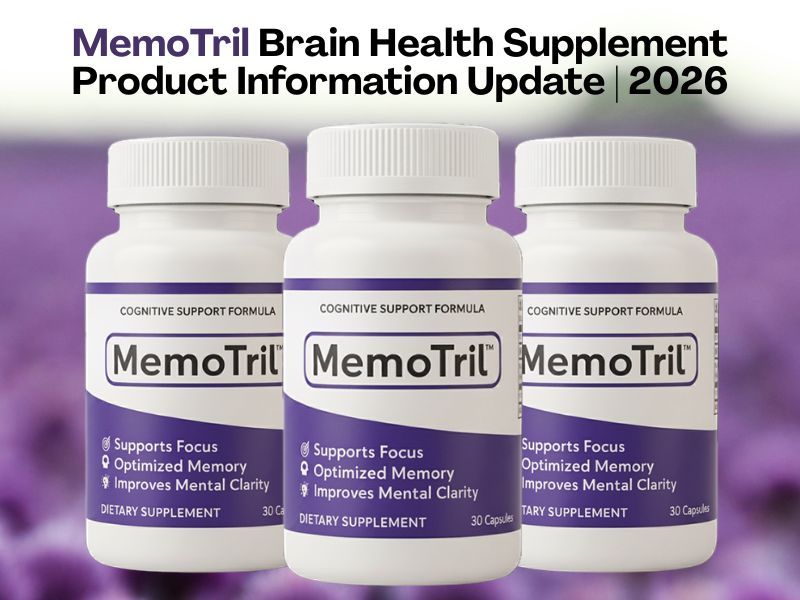
Consumer search activity and market visibility for brain health and cognitive support supplement options have increased in recent years, and that growth has continued heading into 2026. The company has recently updated publicly available product disclosures on its official website, and detailed product information is now accessible for anyone looking to better understand their supplement options.
This article provides informational context about the brain health supplement category and summarizes what MemoTril has disclosed about its product. Readers seeking primary-source detail can view the current MemoTril offer (official MemoTril page) to review the company's complete product disclosures directly. This article does not assess product effectiveness or outcomes and focuses solely on publicly available disclosures.
Why Consumers Are Researching Brain Health and Cognitive Support Supplement Options
Increased online comparison activity around brain health and cognitive support supplement options reflects a broader pattern of 2026 consumer research behavior in the dietary supplement space. Common reasons people cite for exploring brain support supplements include general curiosity about brain health maintenance, questions about what ingredients are commonly included in these formulations, and a desire to understand what factors might be worth considering before making a purchase decision.
The broader supplement market includes a wide range of products positioned within the brain health supplement category, and consumers frequently report difficulty distinguishing between them based on publicly available information alone. Many people begin their research by looking at ingredient disclosures, manufacturing details, and company transparency practices as initial comparison points.
As with any supplement category, individual research needs vary. Some consumers are primarily interested in understanding what a product contains, while others focus on company policies, pricing structures, or manufacturing disclosures. This article does not recommend any specific product or approach and is limited to summarizing publicly available information.
What "Cognitive Support Supplements" Typically Refers To
The phrase "cognitive support supplements" is a broad category descriptor used across the supplement industry. Products within this category generally contain various combinations of vitamins, minerals, herbal extracts, amino acids, or fatty acids. The specific formulations vary widely between brands, and no single ingredient profile defines the category.
Consumers researching the memory support category will encounter a range of product formats, including capsules, powders, liquids, and gummies. Pricing, ingredient counts, and manufacturing disclosures also differ significantly from one product to another. Understanding what a category label means — and what it does not mean — can help consumers set realistic expectations when reviewing individual product disclosures.
How Regulatory Oversight Works in the Dietary Supplement Industry
Before evaluating any individual product, it helps to understand how dietary supplement transparency is structured at the regulatory level. In the United States, dietary supplements are regulated under the Dietary Supplement Health and Education Act of 1994 (DSHEA). Under this framework, supplements do not require pre-market approval from the FDA before they are sold to consumers. This is a meaningful distinction from prescription medications, which must go through clinical trials and receive FDA approval before reaching the market.
What the FDA does require is that supplement manufacturers register their facilities and follow Good Manufacturing Practices (GMP), which establish baseline standards for production quality, cleanliness, and record-keeping. It is important to note that FDA facility registration is a regulatory requirement — not an endorsement, approval, or evaluation of any specific product manufactured in that facility.
Supplement labels are also governed by specific rules. Companies are permitted to make structure-and-function claims (such as "supports immune health") but are not permitted to claim that a product diagnoses, treats, cures, or prevents any disease. When consumers see these distinctions on a label, understanding the regulatory framework behind them can help provide useful context for comparison.
How to Evaluate Cognitive Support Supplements
For consumers comparing products in this space, several non-performance factors can help clarify what a company actually discloses versus what remains unclear. These evaluation criteria apply broadly across the cognitive support supplement category and are not specific to any single product.
Label transparency is one of the first things experienced supplement researchers look at. Some companies publish complete Supplement Facts panels that list each ingredient with its individual amount per serving. Others group multiple ingredients into a proprietary blend with only a combined total weight disclosed, which makes it difficult to assess how much of any single ingredient is included. Whether a company provides full individual amounts or uses blended totals is a meaningful distinction when comparing options.
Allergen and dietary restriction disclosures are another area where company transparency varies. Some brands clearly state whether their products contain common allergens such as soy, dairy, gluten, shellfish, or tree nuts. Others do not address allergen content on their product pages at all. For consumers managing dietary restrictions or sensitivities, the presence or absence of these disclosures can be a deciding factor.
Additional factors consumers commonly evaluate include whether the company identifies its manufacturing location and facility certifications, whether customer service contact information is clearly accessible, and whether the company publishes its refund and return policy in language that is easy to locate and understand. None of these factors speak to whether a product works — but they do speak to how transparent the company is with the people considering a purchase.
Understanding Subscription and Recurring Billing Disclosures
Some supplement companies offer one-time purchases, while others provide subscription or recurring billing options. Consumers reviewing checkout disclosures may want to confirm whether recurring billing terms apply and how cancellation procedures are outlined before completing a purchase.
Key questions consumers may want to consider include whether the company clearly discloses recurring charges at the point of checkout, whether cancellation can be completed online or requires contacting customer support, and whether any restocking or cancellation fees apply. These are standard disclosure-level considerations that apply across the supplement industry and are not specific to any single product.
Common Ingredients Consumers Encounter in This Category
When researching brain support supplements, consumers will encounter a recurring set of ingredient names across many different brands. Understanding what these ingredients are — at a basic, category level — can help readers navigate product labels more confidently.
Herbal extracts are among the most commonly listed ingredients in this category. Plants such as Bacopa monnieri, Ginkgo biloba, Rhodiola rosea, and Lion's Mane mushroom appear frequently across product labels in the cognitive support space. These are botanical ingredients with long histories of traditional use, and they are widely available in supplement form from numerous manufacturers.
Phospholipids and fatty acids also appear regularly. Phosphatidylserine is a phospholipid that occurs naturally as a component of cell membranes, and Omega-3 DHA is a fatty acid found in fish oil and algae-based supplements. Both are commonly listed in products positioned within the brain health and cognitive support categories.
This section describes what these ingredient categories are — not what they do. Consumers interested in the research surrounding any specific ingredient can consult peer-reviewed sources or speak with a qualified healthcare professional for context that goes beyond label-level information.
Ingredient Transparency in the Brain Health Supplement Category
Ingredient transparency is a factor many consumers consider when researching supplements. Companies vary in how much detail they provide about formulation, sourcing, and manufacturing processes. Some brands publish complete Supplement Facts panels with individual ingredient amounts, while others use proprietary blends that group ingredients together.
According to the company's product disclosures, MemoTril lists Bacopa Monnieri, Lion's Mane Mushroom, Ginkgo Biloba, Phosphatidylserine, Rhodiola Rosea, and Omega-3 DHA as its primary ingredients. Readers interested in specific dosage information can find complete details on the company's official product page. This overview does not evaluate the intended effects of these ingredients and focuses only on what is publicly disclosed by the company.
Manufacturing and Quality Disclosures
Manufacturing transparency is another area consumers commonly research when evaluating supplement options. The company states that MemoTril is manufactured in the United States in a facility it describes as FDA-registered and operating under Good Manufacturing Practices (GMP). The company also describes the product as non-GMO and gluten-free.
These are company-provided disclosures and have not been independently verified as part of this overview. As noted in the regulatory section above, FDA registration of a manufacturing facility is a regulatory requirement for supplement manufacturers — it does not indicate FDA approval or evaluation of any specific product. Consumers interested in confirming manufacturing details can review the company's official materials directly.
Why Transparency Matters in the Cognitive Support Category
In a category where product claims can be difficult to verify independently, dietary supplement transparency often becomes one of the most useful comparison tools available to consumers. When companies clearly disclose what their products contain, where they are manufactured, and what their policies are, it gives consumers a factual basis for comparison — even in the absence of clinical outcome data.
Factors that contribute to a transparent product profile include full ingredient disclosure with individual amounts, clearly published contact information for customer service, accessible refund and return policy language, and visible manufacturing and facility details. Products that provide this level of disclosure make it easier for consumers to compare options side by side on factual terms rather than relying solely on marketing language.
This overview does not evaluate whether any specific company meets a particular transparency standard. It is included to help consumers understand what types of information they may want to look for when conducting their own research.
What MemoTril Discloses About Its Product
Based on publicly available company materials, MemoTril is positioned as a dietary supplement in capsule form within the cognitive support category. The company's published materials reference a blend of ingredients commonly listed within this category.
According to the company's publicly available checkout and policy disclosures, MemoTril is offered through its official website in multiple quantity options, with pricing, shipping terms, and applicable fees presented at the time of purchase. Because these terms may change, consumers can review the most current disclosures directly on the official MemoTril page.
Refund Policies and Customer Support Disclosures
Publicly available policy disclosures indicate the company describes a time-limited refund window, with terms and conditions available on its official website. Consumers are encouraged to review eligibility requirements, timelines, and return procedures directly before making a purchase decision. Readers should review the full terms directly on the official page, as refund processing timelines and specific conditions may vary.
Questions Consumers Are Often Advised to Discuss With a Healthcare Professional
Because brain health supplements often contain herbal extracts and bioactive compounds, certain individuals are often advised to discuss supplementation with a qualified healthcare professional before use. This is particularly relevant for people who are currently taking prescription medications, as discussing potential supplement considerations with a qualified healthcare professional may help ensure decisions are appropriate for an individual's circumstances.
Populations that are commonly advised to consult a healthcare provider before starting any new supplement include individuals managing cardiovascular conditions, those taking blood-thinning medications, individuals with bleeding disorders, people managing blood pressure conditions, those who are pregnant or nursing, and anyone currently undergoing treatment for a diagnosed medical condition.
This section does not constitute medical advice and does not suggest that any specific product is unsafe for any population. It reflects general guidance that applies broadly across the dietary supplement category and is included to support informed decision-making.
How Consumers Can Continue Their Research
For consumers researching brain health and cognitive support supplement options, publicly available product disclosures serve as a starting point — not an endpoint — for comparison. Factors such as ingredient transparency, manufacturing location, facility certifications, refund terms, and customer service accessibility can help narrow the field of available options without requiring claims about what any given product does or does not do.
Email: wellness@supportcaps.com
This overview has summarized publicly available disclosures for MemoTril within the context of the broader brain health supplement category. Nothing in this content constitutes medical advice, a product endorsement, or an effectiveness claim. Consumers with specific health concerns should consult a qualified healthcare professional before making any supplement decisions.
Disclaimer: This article is for informational purposes only and does not constitute medical advice, a diagnosis, or a treatment recommendation. Individual health decisions should be made in consultation with a qualified healthcare professional. If you purchase through links in this article, a commission may be earned at no additional cost to you.

Email: wellness@supportcaps.com


